Social-emotional development includes the child’s experience, expression, and management of emotions and the ability to establish positive and rewarding relationships with others (Cohen and others 2005). It encompasses both intra-personal and inter-personal processes.
The core features of emotional development include the ability to identify and understand one’s own feelings, to accurately read and comprehend emotional states in others, to manage strong emotions and their expression in a constructive manner, to regulate one’s own behavior, to develop empathy for others, and to establish and maintain relationships. (National Scientific Council on the Developing Child 2004, 2)
Interactions with Adults
Infants experience, express, and perceive emotions before they fully understand them. In learning to recognize, label, manage, and communicate their emotions and to perceive and attempt to understand the emotions of others, children build skills that connect them with family, peers, teachers, and the community. These growing capacities help young children to become competent in negotiating increasingly complex social interactions, to participate effectively in relationships and group activities, and to reap the benefits of social support crucial to healthy human development and functioning.
Relationships with Peers
Healthy social-emotional development for infants and toddlers unfolds in an interpersonal context, namely that of positive ongoing relationships with familiar, nurturing adults. Young children are particularly attuned to social and emotional stimulation. Even newborns appear to attend more to stimuli that resemble faces (Johnson and others 1991). They also prefer their mothers’ voices to the voices of other women (DeCasper and Fifer 1980). Through nurturance, adults support the infants’ earliest experiences of emotion regulation (Bronson 2000a; Thompson and Goodvin 2005).
Expression of Emotion
Responsive care-giving supports infants in beginning to regulate their emotions and to develop a sense of predictability, safety, and responsiveness in their social environments. Early relationships are so important to developing infants that research experts have broadly concluded that, in the early years, “nurturing, stable and consistent relationships are the key to healthy growth, development and learning” (National Research Council and Institute of Medicine 2000, 412). In other words, high-quality relationships increase the likelihood of positive outcomes for young children (Shonkoff 2004). Experiences with family members and teachers provide an opportunity for young children to learn about social relationships and emotions through exploration and predictable interactions. Professionals working in child care settings can support the social-emotional development of infants and toddlers in various ways, including interacting directly with young children, communicating with families, arranging the physical space in the care environment, and planning and implementing curriculum.
Identity of Self in Relation to Others
Brain research indicates that emotion and cognition are profoundly interrelated processes. Specifically, “recent cognitive neuroscience findings suggest that the neural mechanisms underlying emotion regulation may be the same as those underlying cognitive processes” (Bell and Wolfe 2004, 366). Emotion and cognition work together, jointly informing the child’s impressions of situations and influencing behavior. Most learning in the early years occurs in the context of emotional supports (National Research Council and Institute of Medicine 2000). “The rich interpenetrations of emotions and cognitions establish the major psychic scripts for each child’s life” (Panksepp 2001). Together, emotion and cognition contribute to attentional processes, decision making, and learning (Cacioppo and Berntson 1999). Furthermore, cognitive processes, such as decision making, are affected by emotion (Barrett and others 2007). Brain structures involved in the neural circuitry of cognition influence emotion and vice versa (Barrett and others 2007). Emotions and social behaviors affect the young child’s ability to persist in goal-oriented activity, to seek help when it is needed, and to participate in and benefit from relationships.
Recognition of Ability
Young children who exhibit healthy social, emotional, and behavioral adjustment are more likely to have good academic performance in elementary school (Cohen and others 2005; Zero to Three 2004). The sharp distinction between cognition and emotion that has historically been made may be more of an artifact of scholarship than it is representative of the way these processes occur in the brain (Barrett and others 2007). This recent research strengthens the view that early childhood programs support later positive learning outcomes in all domains by maintaining a focus on the promotion of healthy social emotional development (National Scientific Council on the Developing Child 2004; Raver 2002; Shonkoff 2004).
Learn more about adolescent learning here
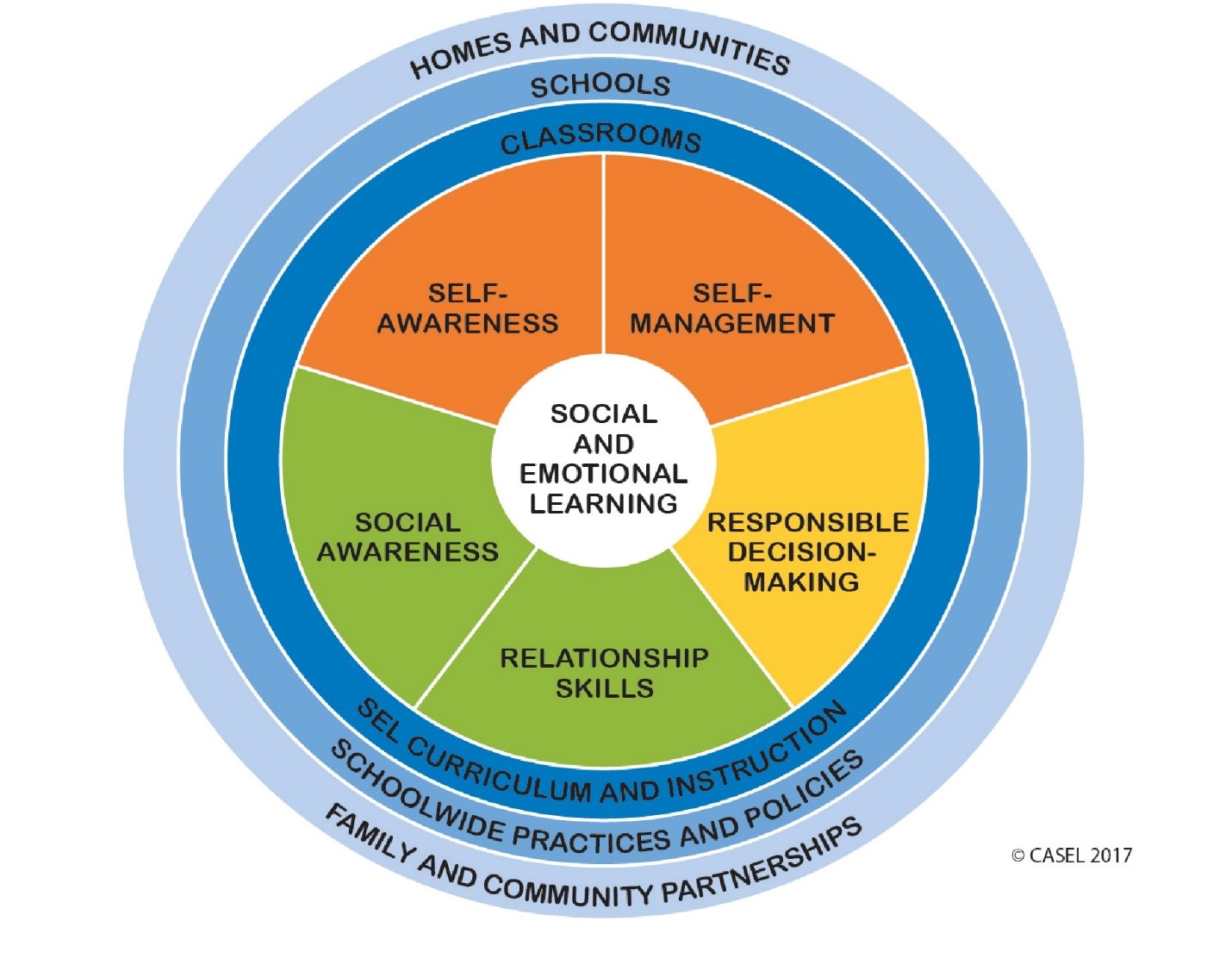
 Social and Emotional Intelligence in Early Childhood Education