
Social Learning Theories
Theories are important for analyzing and evaluating practical stances. Here is a brief review of three main theories in social and emotional development.
John Bowlby’s Attachment Theory
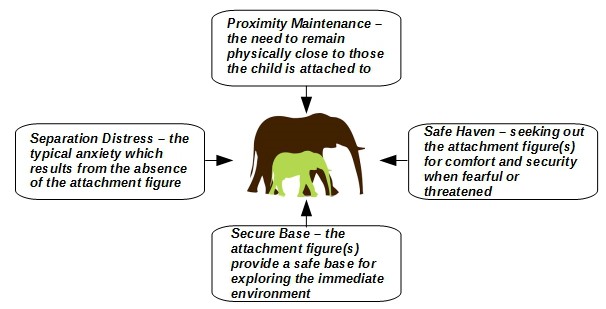
He proposes that the child’s relationship with his caregiver would affect his social relationships forever. The child is attached to any form of care, for example eye-to-eye contact, skin contact, smell, voices, feeding, bathing, and playing. Bowlby (1980) defined attachment as a ‘lasting psychological connectedness between human beings’, and he believed ‘the propensity to make strong emotional bonds to particular individuals (is) a basic component of human nature’. Bowlby observed that a child enjoying that feeling of reassurance and security will be less fearful and will have more confidence from the infant to the adolescent stage and life-long.
Four features of this phenomenon are illustrated in the figure below:
Bandura’ Social Learning Theory
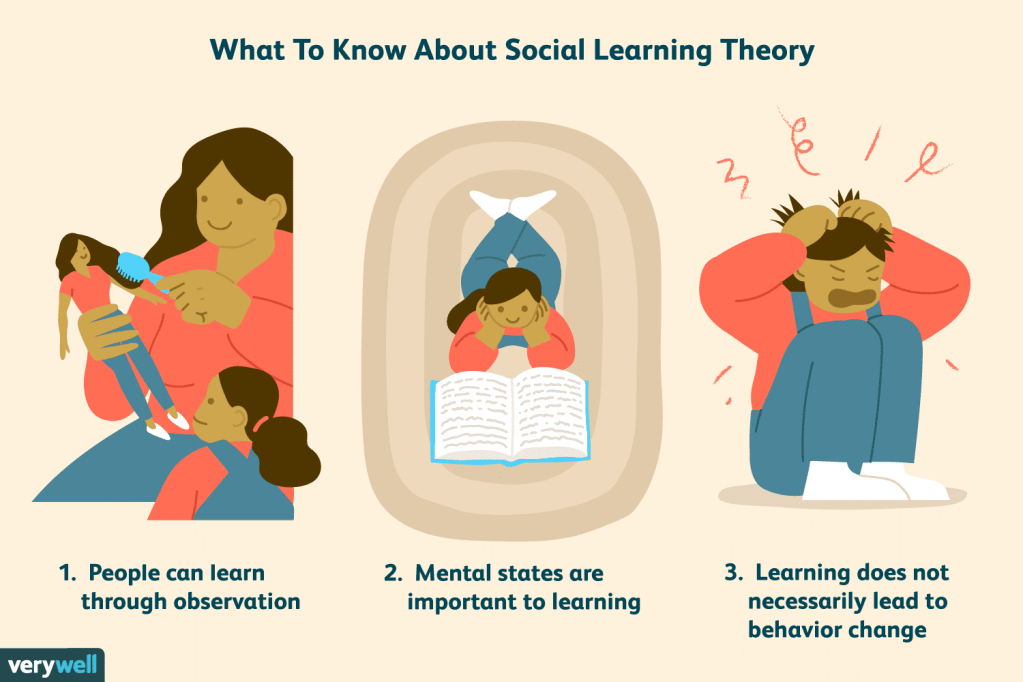
Bandura (1977) builds his premise on the observation of how kids are like sponges, soaking up experiences all around. Thus, observational learning means that children tend to imitate what they observe.
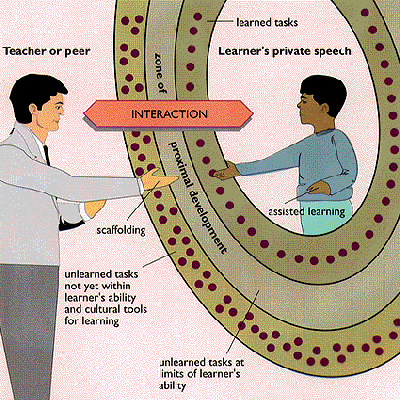
Finally, Vygotsky’s social constructivism theory where knowledge is constructed through social encounters. Vygotsky argues that ‘any function in the child’s cultural development appears twice… First it appears on the social plane, and then on the psychological plane.’ His Zone of Proximal Development (ZPD) is the zone between a learner’s ability to complete a task with guidance or collaboration and his/her ability to solve it alone.
Interested right? learn more social and emotional learn here
 Social and Emotional Intelligence in Early Childhood Education